Dr. Thomas Saitta, DDS
Crowns
A crown restores a tooth that has weakened past the point a filling will hold, shade-matched to sit beside the teeth around it.
Chapter 01
When a filling stops being enough
Teeth weaken over time. Decay works its way in, old fillings crack at the edges, and small fractures spread further than they look from the outside. Discoloration is often the first visible sign, but it is rarely the only thing going on underneath.
Once a tooth has lost enough of its own structure, a filling has nothing solid left to bond to and hold. A crown covers the whole tooth above the gumline instead of patching one surface of it, which is what restores it rather than just delaying the next problem.
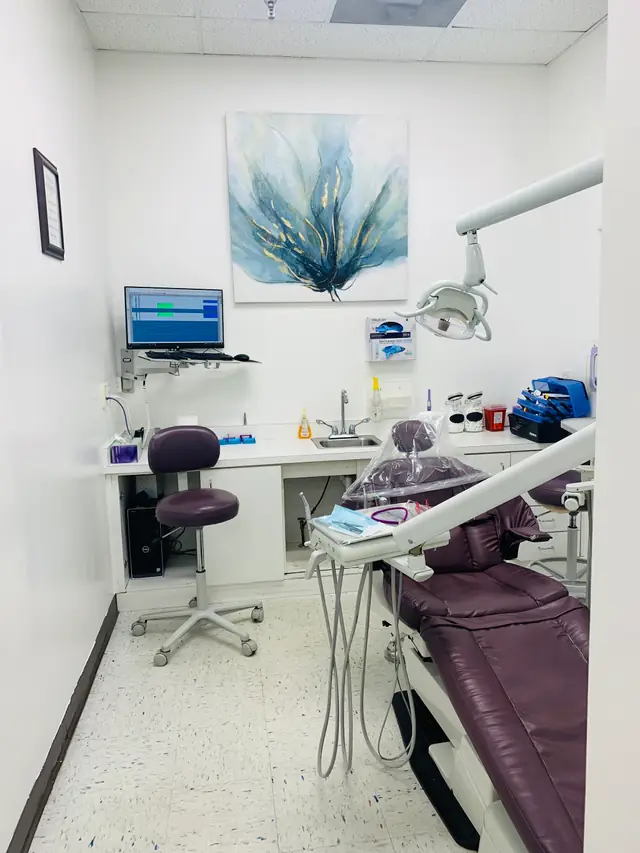
Treatment room at Crown Dentistry of the Palm Beaches where crowns are prepared and fitted
Porcelain, porcelain fused to metal, or full gold
Porcelain is the material most patients choose, because it is tailored to match the shade of the teeth already in the mouth and reads as a natural tooth rather than a repair.
Porcelain fused to metal and full gold are also available, and the right choice depends on where the tooth sits and what it needs to withstand. Dr. Saitta talks through which one fits the tooth in question at the exam, rather than defaulting to one material for every case.
Chapter 03
Two to four visits, and what happens between them
A crown is not a same-day fix. The tooth is prepared, an impression is taken, and a temporary crown protects it while the permanent one is custom made, which typically takes two to three weeks.
Once the permanent crown is ready, it is checked for fit and bite before it is cemented in place. Cared for like a natural tooth, it typically lasts ten to fifteen years.
Crown Dentistry, We accept most PPO insurance plans and CareCredit financing. Call (561) 964-2002.