Gum Disease Is Quiet Before It's Loud
Gum disease rarely announces itself with pain, which is exactly why the twice-a-year cleaning matters more than it looks like it does.
September 16, 2026 · 3 min read
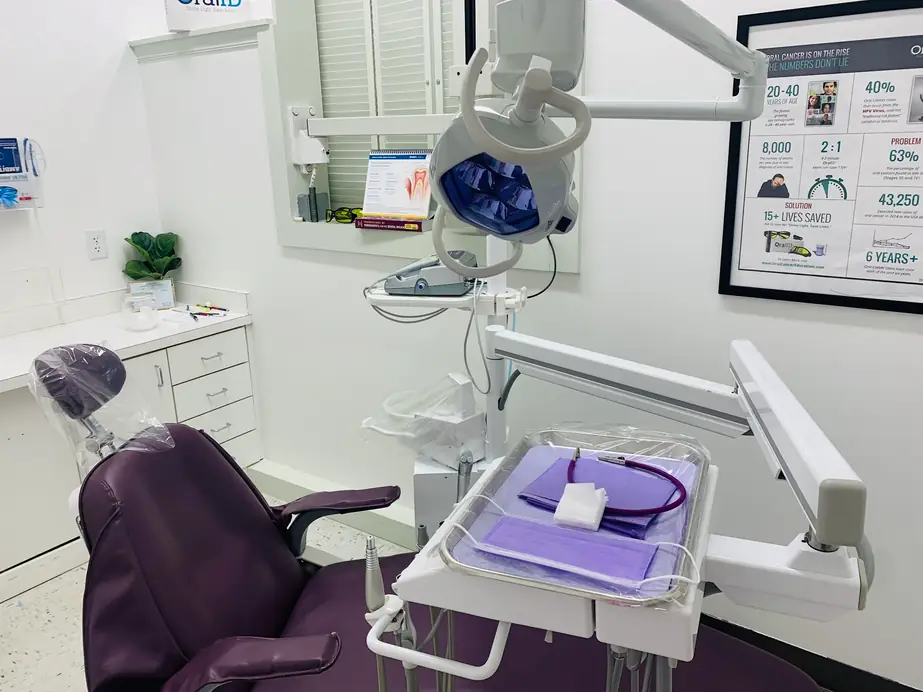
Most people wait for a signal from their mouth before they worry about it: a toothache, a chip, something visibly wrong. Gum disease doesn't usually send that signal. In its early stages it often has no obvious symptoms at all. No pain, no visible swelling, just quiet damage building beneath the surface of the gum line while everything still looks and feels normal.
What actually happens at a cleaning
As the practice puts it plainly on the intake material patients see, gums matter just as much as teeth, and a hygiene visit at Crown Dentistry of the Palm Beaches is built around that idea, not just a polish. Certified Registered Dental Hygienist Monsell Mendez runs the visit, and it covers more ground than most patients expect from a routine cleaning.
- An assessment of your gums, not just your teeth
- Removal of plaque and tartar buildup a toothbrush can't reach on its own
- Cleaning and polishing
- Screening for both decay and early gum disease
- Guidance on an at-home routine that fits how your mouth is actually doing, not a generic pamphlet handed to every patient
One patient, Earl Thomas, wrote after his visit that Monsell was very gentle, thorough, and made his cleaning an easy and pleasant experience. That's the part of a hygiene visit that's easy to overlook: it isn't supposed to be memorable. A cleaning that's uneventful is usually a sign the screening behind it is working.
The six-month rhythm
That cleaning is recommended every six months for most patients, and more often if you're already being treated for periodontal needs. Six months is the interval that catches tartar before it hardens into something a hygienist has to work harder to remove, and it's the interval that catches gum changes while they're still a conversation, not a procedure.
The once-a-year deeper look
Once a year, that routine cleaning is paired with a full exam, and the exam includes something a quick cleaning doesn't: a gum measurement around each tooth. That measurement is how the office tracks whether a gum pocket is deepening year over year, which is the actual early-warning sign for periodontal disease, long before it would ever cause pain on its own.
When it's past routine care
If that screening turns up something a cleaning and better brushing can't handle on their own, the next step at this office is Conservative Periodontal Therapy, CPT for short: early detection and non-surgical treatment of gum disease. Dr. Thomas Saitta is a leading practitioner in CPT, and the approach is built around catching periodontal disease early enough that it doesn't need to become a surgical problem later on.
What untreated gum disease actually costs you
The drift and bone loss that happen once a tooth is already gone are also, in a slower and quieter way, what advanced gum disease does on its own. Loose teeth, shifting bite, bone that doesn't hold what it used to hold. That's the real reason the six-month rhythm and the annual gum measurement matter more than they sound like they should. They're not there to catch a cavity. They're there to catch the thing that doesn't hurt until it's already gone further than it needed to.
The pattern underneath all of this is the same one dentistry keeps coming back to: the earlier something is caught, the smaller the fix. A cleaning doesn't feel urgent, which is exactly why it's easy to push it back a few months and then a few more. If it's been longer than six months since your last visit, that's the conversation worth having before anything starts to hurt. Call Crown Dentistry of the Palm Beaches at (561) 964-2002 to get on the schedule.
Crown Dentistry of the Palm Beaches, (561) 964-2002
Call (561) 964-2002More articles
What Happens in the Gap After You Lose a Tooth
The space left by a missing tooth doesn't stay empty for long, and what moves into it isn't good news.
Wisdom Teeth, and the Week After
The extraction itself is usually the easy part. The days right after are where most of the actual work happens.